 Top list
The 6 best putting mats for practicing at home
Drill mats to green-like turf, matched to the room.
Two tees, a few balls and 15 minutes a session.
No brand pays for a place on our lists. How we make money
 15-minute routine
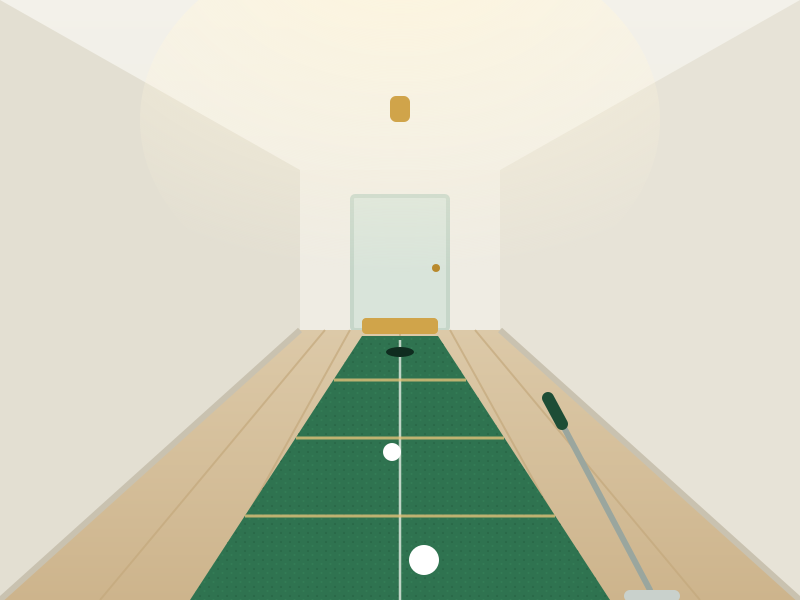
To putt better without a trip to the course, check your setup, then train four things for about 15 minutes a session.
Every drill works on a rug or a hard floor; a mat just makes it tidier.
Basics
Nice to have
Full swings too? See nets, hitting mats and launch monitors.
Six steps, one skill each. Step 7 strings them into a routine you can repeat.
A flat floor away from doors, stairs and walkways, with a towel past the target.
Unroll a new mat and let it flatten before you judge the roll. The towel, or a backstop, stops missed putts before they roll under the sofa.
At address, it shows whether your eyes sit over the ball and your shoulders are square.
Lay the mirror on the floor and set up over it. No mirror? Prop your phone on the floor behind you, film a few putts from down the line, and look for the same two things.
Two tees just wider than the ball, a foot ahead; roll putts through without a touch.
Push the tees into a mat, or set two coins on carpet. It judges one thing: whether the ball leaves the putter on your line. Narrow the gap as it gets easy; a store-bought putting gate does the same job.
Zones at about 3, 6 and 9 feet; roll one ball into each, nearest first.
Mark the zones with tape or tees. A ball that stops short of its zone, or runs past it, sends you back to the start. It trains how far the ball rolls for the stroke you made.
Hole a set number in a row from 3 feet, then 4, then 5; a miss resets the count.
Pick a number, say five. The reset adds a little pressure, so the last putt of a streak feels more like one that counts.
One ball, a new spot each time, and your full routine before every putt.
Look at the line, make a practice stroke, then putt. On the course you get one try from each spot, so this is closer to how putts happen there than rolling ball after ball from one place.
Short and regular suits home practice. The same tees, tape and three balls every time.
Your routine card
Swap in one-ball rounds on the days you want variety.
One person's routine, not a promise. A GOLF.com writer did 15 minutes most evenings, with a mirror and a gate.
Thick carpet rolls slower than a mat on a hard floor, and every drill above still works.
From the CDC's fall-prevention checklist and mat makers' care notes: house rules, not medical advice.
Keep it out of walkways and off stairs. Roll the mat up after use. The CDC's Check for Safety checklist says to fix rugs with double-sided tape or a non-slip backing; treat a mat the same way.
No chips or full swings on a mat not built for it. BirdieBall's care notes list chip shots as damage.
Where small children or pets play. The same CDC checklist says to pick up things on the floor.
Makers disagree on vacuuming: see the care table.
Read its care guide before leaving a rubber- or latex-backed mat down for weeks.
Makers disagree on cleaning, so go by the one that made yours.
| Maker | Cleaning | Vacuum? | Also says |
|---|---|---|---|
| Perfect Practice | Vacuum it as you would any carpet | Yes | Pull the mat tight so the ball runs smoothly up the ramp |
| BirdieBall | Brush with a stiff broom; spot-clean with mild soap and water | No: a rotating drum can tear the surface | Indoor use only; no chip shots |
| Any mat | Store it rolled when it's not in use | Check the maker's notes | Unroll it and let it flatten before you judge the roll |
From each maker's product and care pages. Choosing a mat? See the 6 best putting mats or our Perfect Practice review.
Green speed in feet: how far a ball rolls off a Stimpmeter, a grooved bar raised to 20 degrees.
Learn your mat's speed with the ladder drill, not the number on the box. A Stimpmeter explainer is coming in the putting mats hub.
The bar is raised until a ball rolls off it at 20 degrees. Three balls are rolled each way across a flat spot, and the average distance, in feet, is the reading (GOLF.com).
Pick a flat spot away from doors, stairs and walkways, check your setup, then work through a gate for start line, a ladder for speed and short-putt streaks. A mat helps, but carpet works too, with coins as targets.
There is no single best way. A short routine that covers start line, speed and holing short putts, finished with one-ball rounds that use your full pre-putt routine, covers the basics. Hitting the same putt over and over from one spot is the habit to avoid.
Use carpet or a hard floor. Tape a straight start line, use a coin or a cup laid on its side as the target, and expect thick carpet to roll slower than a mat on a hard floor.
For home practice: the gate drill for start line, the ladder drill for speed, short-putt streaks for holing out with a little pressure, and one-ball rounds for your routine. Together they cover what a home floor can train.
Two tees, or a store-bought gate, set just wider than the ball about a foot in front of it. Rolling the ball through without touching either side shows whether it started on your line.
A speed drill. Mark zones at roughly 3, 6 and 9 feet and roll each ball into the next zone. A ball that misses its zone sends you back to the start.
A measure of green speed: how many feet a ball rolls after leaving a Stimpmeter, a grooved bar raised until the ball releases at 20 degrees. Higher is faster. GOLF.com calls about 8 to 8.5 feet slow and 12 feet or more fast; Perfect Practice says its mat rolls 10 to 14, depending on the floor under it.
Top listDrill mats to green-like turf, matched to the room.
 Review
Owner reports, and the ramp they argue about.
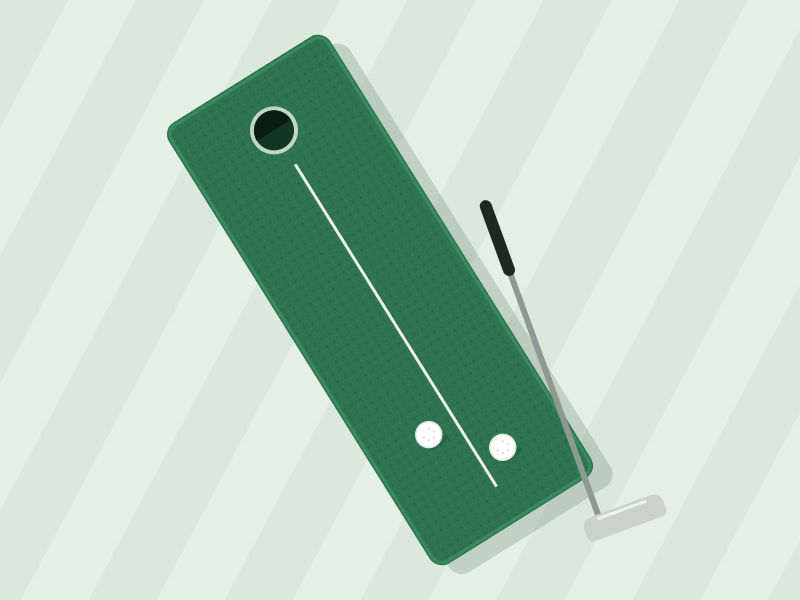 Category
Top picks, reviews, sizing and drills.
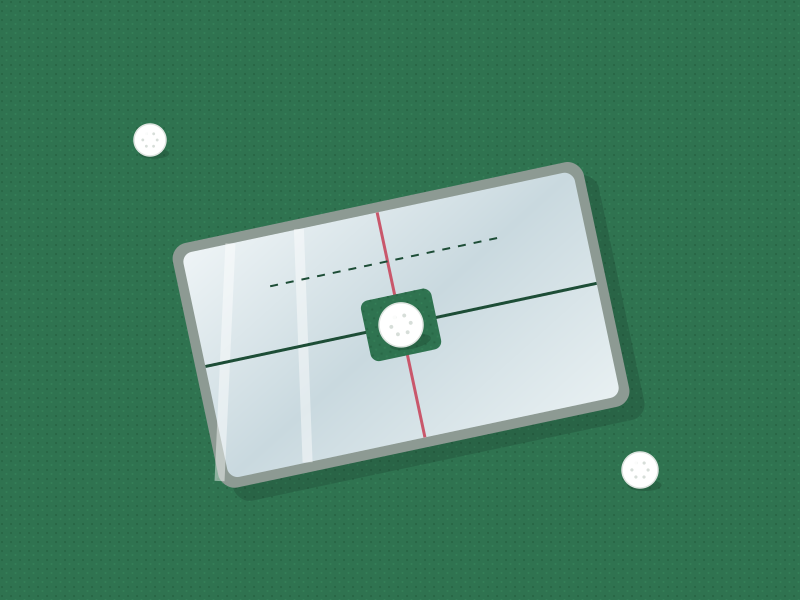 Training aids
Eyes over the ball, shoulders square, at home.