 Rank 1
Best for structured drills
Perfect Practice Putting Mat
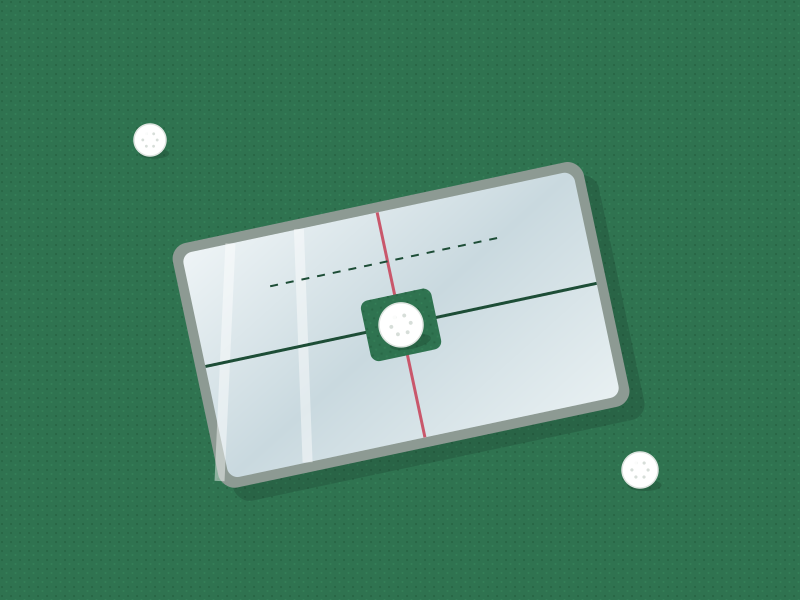
Lines, distance marks and a ball return, in three lengths.
Check priceThe best putting mat is the one that stays rolled out: it fits the room, lies flat and rolls like a green.
No brand pays for a place on our lists. How we make money
 Mats from 8 ft to 15 ft 6 in
Most homes do well with one of these. All six are compared in the table below.
Rank 1Lines, distance marks and a ball return, in three lengths.
Check price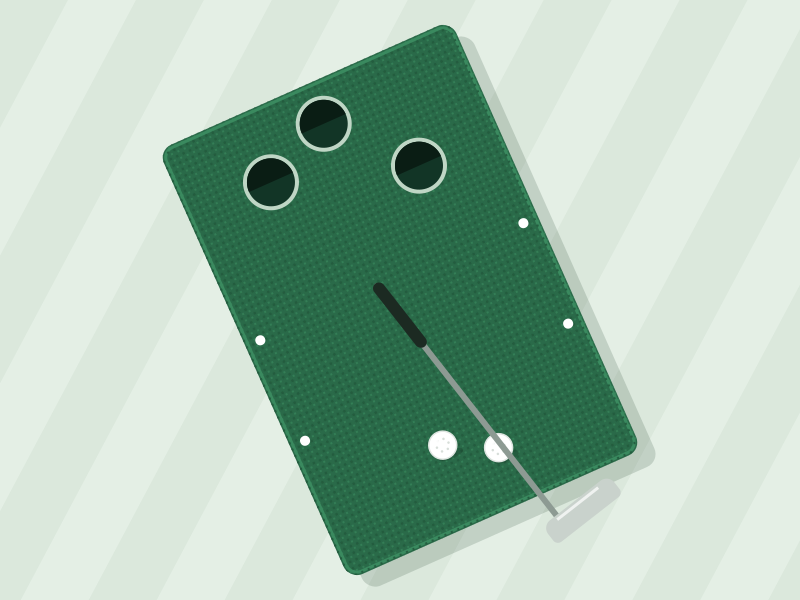 Rank 2
Dense turf with three recessed, regulation-width cups.
Check price Rank 3
App games, stats and online matches for golfers who like a contest.
Check priceThe makers' own figures. Speeds are Stimpmeter numbers and move with the floor; "Not stated" means the maker gives none.
| Pick and who it suits | Length | Stated speed | Cup and return | Store |
|---|---|---|---|---|
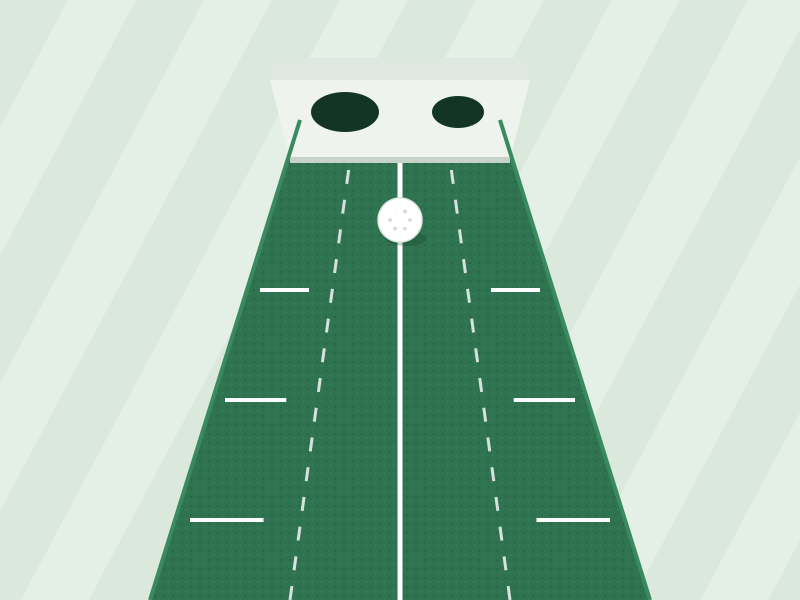
| Perfect PracticePractices most days, likes a routine | 8 ft, 9 ft 6 in or 15 ft 6 in | 10 to 14 | Two small holes, magnetized ramp return | Check price |
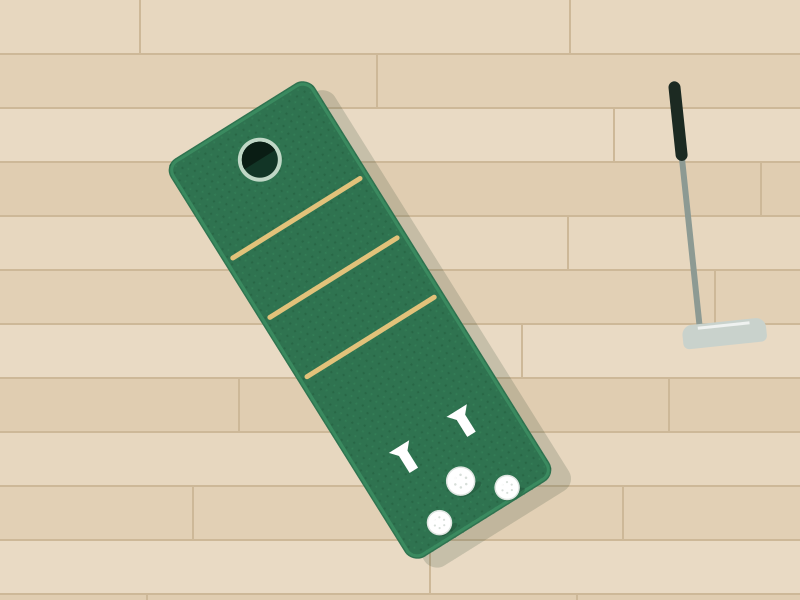
| PrimePuttWants it to feel like the club's green | 9 or 12 ft | 9 to 11 | Three regulation-width cups, no return | Check price |
| PUTTRLoves gadgets and a friendly match | 12 ft | 11 | Tracked hole, ball return | Check price |
 WellPutt 13ftWorks on aim and pace, packs light WellPutt 13ftWorks on aim and pace, packs light | 13 ft | 10 to 11.5 | No hole, no return | Check price |
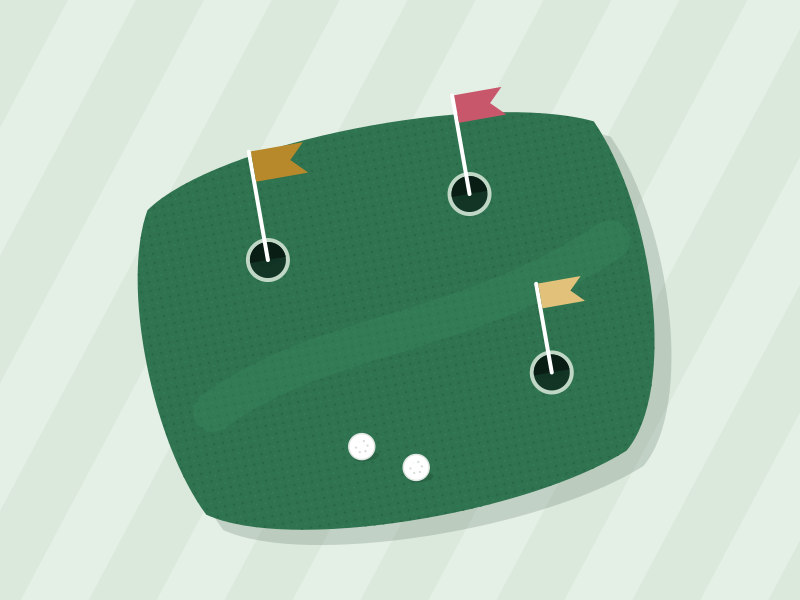 BirdieBallHas a basement or a spare room BirdieBallHas a basement or a spare room | To order | Not stated | Up to 3 holes plus a high-back cup | Check price |
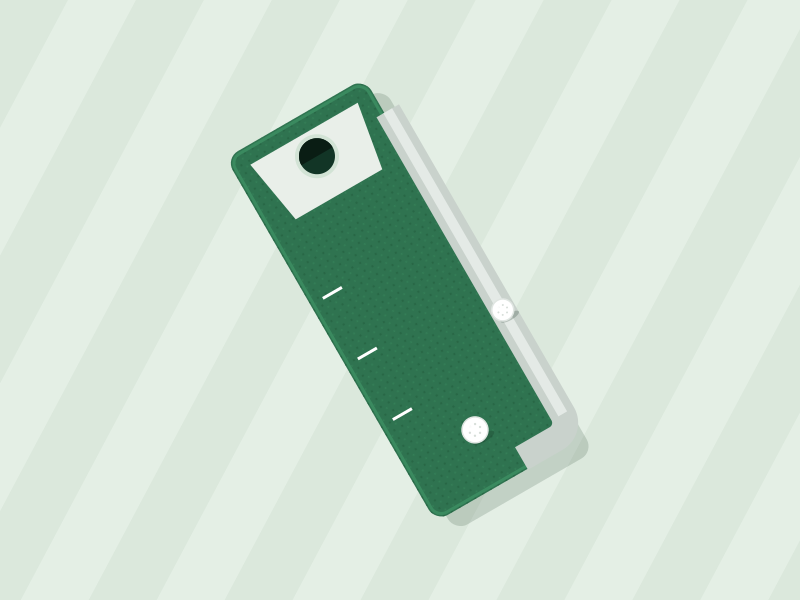 SKLZ Accelerator ProNew to golf, or short on space SKLZ Accelerator ProNew to golf, or short on space | 9 ft | Not stated | Upslope cup, gravity return | Check price |
We gave more weight to problems reviewers found after weeks of use than to first impressions. Read how we pick
reviews per pick
Long-form reviews and roundups of each mat.
source for specs
The maker's own page, even when a retailer disagrees.
things weighed
Roll, length, cup and return, markings, lay-flat.
lab tests or paid spots
Likes and gripes sum up several reviews, never one reviewer.
A true roll at a pace close to a green, stated as a Stimpmeter number.
Long enough for the putts that cost strokes, short enough to stay out.
Recessed regulation-width cups feel most real; the ramp is what owners argue about most.
Lines, speed zones or app tracking that show what went wrong on a miss.
Creases spoil the roll; weight and backing decide whether it gets used on a weeknight.
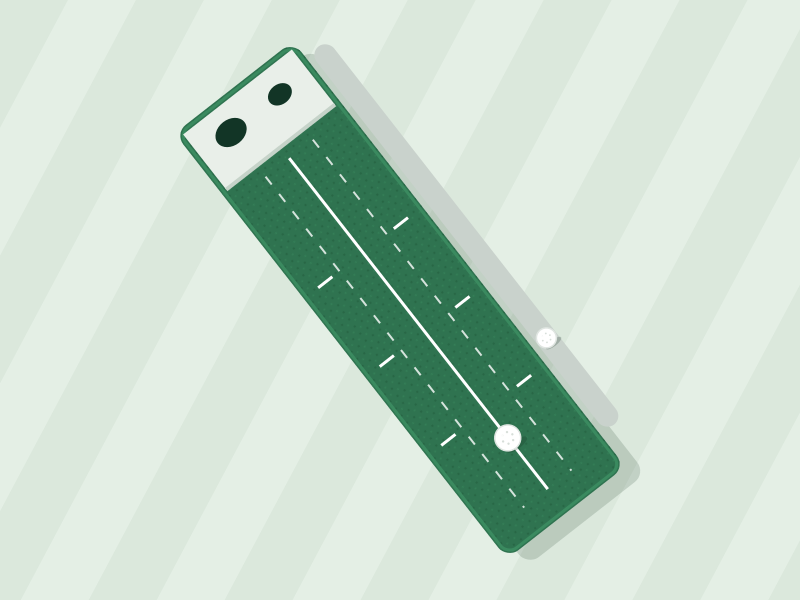
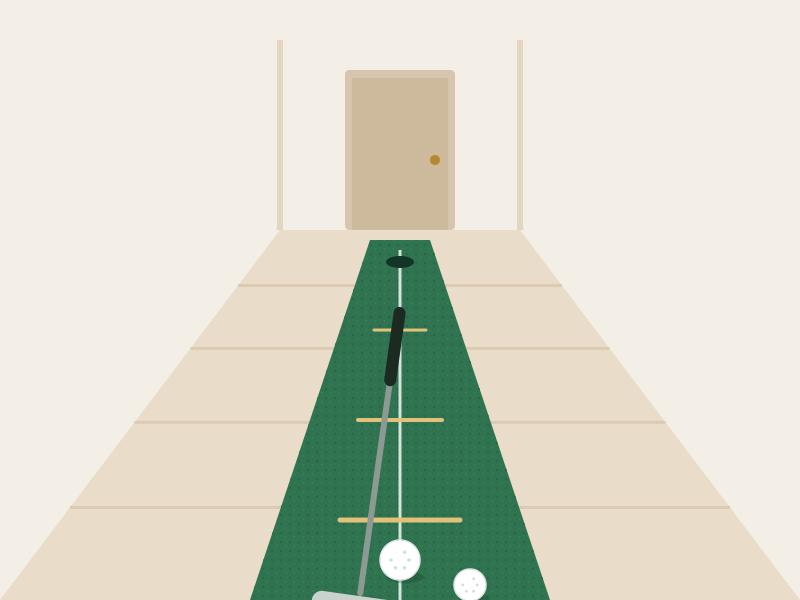
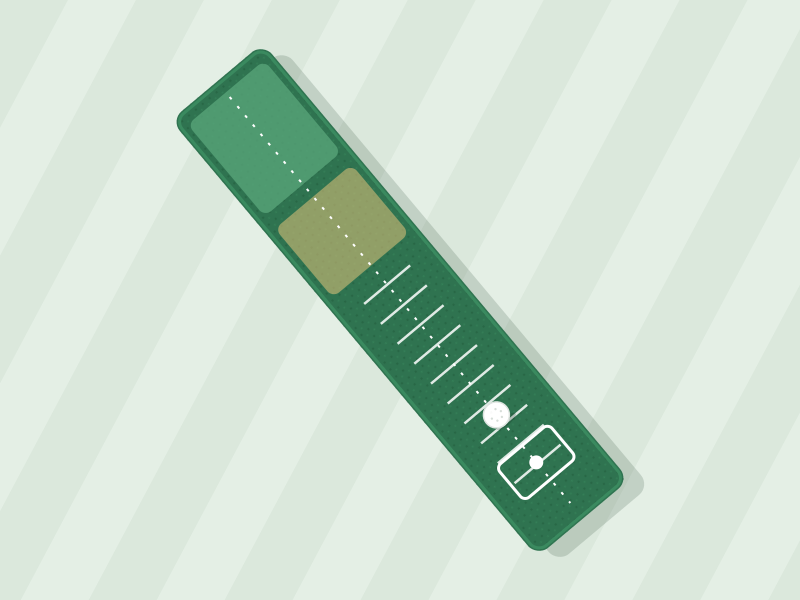
Drawings show the kind of mat, not the product. Specs come from each maker's page; likes and gripes sum up its reviews.
Rank 1Likes
Gripes
Specs for the Standard edition; the Compact and Extra Long are also listed.
Rank 2Likes
Gripes
Rank 3Likes
Gripes
Rank 4Likes
Gripes
Rank 5Likes
Gripes
Specs for the Classic Depth green with the RollTech surface.
Rank 6Likes
Gripes
One reviewer puts its roll near 10 on the Stimpmeter; SKLZ states no figure.
Decide on two things: how wide a strip of floor you can give it, and real drops or structured drills.
Narrow, rolls away, often a ramp cup and a ball return. Most homes need one.
Wider, with several holes and breaks you set. Suits a basement, or a golfer who misses breaking putts.
Green speed as the USGA measures it: a ball rolls off a set ramp, and the distance in feet is the speed. Makers quote about 9 to 14.

The top of a maker's range: near 14 on Perfect Practice's own figures.
Close to the headline number: PrimePutt states 10 here.
The slow end of any range: near 10 for Perfect Practice.
Read the box number as a range for your room. More on green speed in our putting mats and indoor greens hub.
Measure the strip of floor you can keep clear. Leave room for the stroke and a backstop: the longest putt is shorter than the mat.
Short mats that roll away after each session.
A mid-length mat that can stay down.
Lag putts from distance, or a green cut to size.
Tip: tape the mat's outline on the floor for a day. If you step around it, the mat will end up in a closet.
A gift a golfer can use on a winter weeknight, if it fits the room. Five checks before you wrap one.
Measure where it will go. A mat that blocks a hallway gets put away.
BirdieBall is indoor-only; PrimePutt can go outside too.
Perfect Practice lists a left-handed Standard edition.
If it leans on an app or a membership (PUTTR, WellPutt), say so.
Tell them to unroll it and let it lie flat before the first session.
The same five come up again and again in reviews.
A longer mat sounds better until it doesn't fit the room.
Read the stated speed against your floor, not the box.
Flat mats teach start line and pace. Breaks need a green you can shape.
Creases and curled ends push the ball off line.
Leaving it across a walkway. A mat's edge and a stray ball are easy to trip on. The CDC's fall-prevention checklist suggests keeping walkways clear, so roll it away or keep it along a wall.
For a golfer who will leave one rolled out, owners mostly say yes: short, frequent sessions are where a mat earns its place. The mats that end up in a closet were usually too long for the room or too slow to set up, so match the length to the floor you can keep clear.
Owners and long-form reviewers credit regular short sessions with a steadier start line and better pace, especially on mats with alignment lines, speed zones or app tracking. A flat mat cannot teach you to read breaks, so time on a real green still matters.
It depends on the room and the golfer: Perfect Practice for structured drills, PrimePutt for the most green-like roll, PUTTR for games, WellPutt for start line and speed, BirdieBall for a custom size with breaks, and SKLZ for a simple first mat.
Give it time: unroll it on a flat floor and leave it, about a day in one review. Perfect Practice says to pull its mat tight so the ball runs up the ramp smoothly, and a WellPutt review says one end may need weighting at first.
It is green speed as measured with the USGA's Stimpmeter: a ball is released down a set ramp, and the distance it rolls, in feet, is the speed. Mat makers quote figures from about 9 to 14, and the floor under the mat changes it: hard floors run faster, thick carpet slower.
A mat is narrow, rolls away and often has a ramp cup and a ball return. An indoor putting green is wider, has recessed cups and can carry breaks. Pick by the width of the room and whether the golfer wants real drops or structured drills.
For most homes, the Perfect Practice mat is the safest buy. Pick PrimePutt if real drops matter more than drills, and PUTTR for a golfer who needs a game to keep going.
 Putting mats
 6 drills
 Gift guide
 Training aids